A federal judge in Manhattan dismissed a defamation-related lawsuit brought by journalist Michael Wolff against First Lady Melania Trump on grounds that the filing represented an inappropriate use of the court system.
U.S. District Judge Mary Kay Vyskocil, an appointee of President Donald Trump, described the case as a “contorted” attempt and said it was “not how federal courts work.” She criticized what she called an “inappropriate level of tactical gamesmanship” and declined to exercise jurisdiction despite acknowledging that both parties have a “real dispute.” Vyskocil dismissed the case so it could “be litigated like any other,” effectively sending the matter back to ordinary litigation channels.
The dispute originated last year when attorneys for Melania Trump sent Wolff a cease-and-desist letter demanding he remove certain statements about the first lady. The letter warned that failure to comply would leave her with “no alternative” but to pursue legal action. In response, Wolff filed suit against her in New York state court in October. Trump’s legal team, led by attorney Alejandro Brito, successfully transferred the case to federal court.
In her ruling, Judge Vyskocil noted the unusual procedural posture of the case while emphasizing that federal courts should not be drawn into what she viewed as an abusively presented dispute.
A spokesperson for the first lady welcomed the outcome, stating that Melania Trump “is proud to continue standing up to, and fighting against, those who spread malicious and defamatory falsehoods as they desperately try to get undeserved attention and money from their unlawful conduct.” The first lady’s legal team had previously argued that Wolff’s statements caused her “overwhelming reputational and financial harm.”
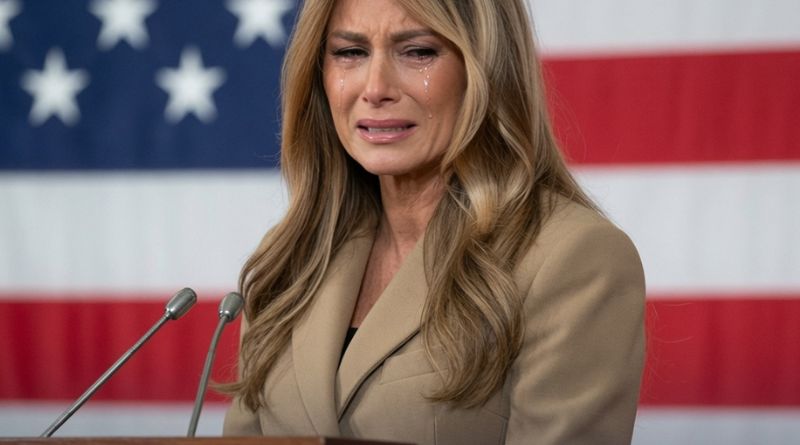
Melania Trump, 56, has repeatedly and forcefully denied any involvement with Jeffrey Epstein, the financier who died in jail in 2019 while awaiting trial on federal charges of child sex trafficking. In an April press conference, she declared, “The lies linking me with the disgraceful Jeffrey Epstein need to end today.” She added, “The individuals lying about me are devoid of ethical standards, humility, and respect. I do not object to their ignorance, but rather I reject their mean-spirited attempts to defame my reputation.”
Wolff’s lawsuit countered that the president and first lady “have made a practice of threatening those who speak against them” with expensive legal actions intended “to silence their speech, to intimidate their critics generally, and to extract unjustified payments and North Korean-style confessions and apologies.” He argued that certain statements were taken out of context or amounted to protected opinion, including his characterization of the Trumps’ marriage as a “sham marriage” or “trophy marriage,” which he described as “fair and justified.” The filing also stressed that Wolff had never accused the first lady of criminal involvement with Epstein.
The controversy gained additional attention last summer when The Daily Beast published and later retracted an article titled “Melania Trump ‘Very Involved’ in Epstein Scandal: Author,” which was based on an interview with Wolff. Following a letter from Brito, the outlet removed the piece. In the original interview, Wolff reportedly clarified that he had described the first lady as being “behind the scenes” in handling White House matters related to the situation, but not involved in any criminal activity.
The case has drawn comments from members of Congress. Republican Rep. Nancy Mace praised Melania Trump’s stance, saying she “stands with Epstein victims” and highlighting the first lady’s advocacy for legislation addressing the distribution of fake intimate images. On the Democratic side, Rep. Robert Garcia expressed support for a public hearing, stating, “We agree with First Lady Melania Trump’s call for a public hearing,” and urged action from congressional leadership. In her April remarks, the first lady had called on Congress to act, saying, “Now is the time for Congress to act,” and encouraging lawmakers to allow victims to testify under oath.
The dismissal leaves open the possibility for further litigation in state court or other appropriate venues as both sides continue to assert their positions in a long-running public dispute.