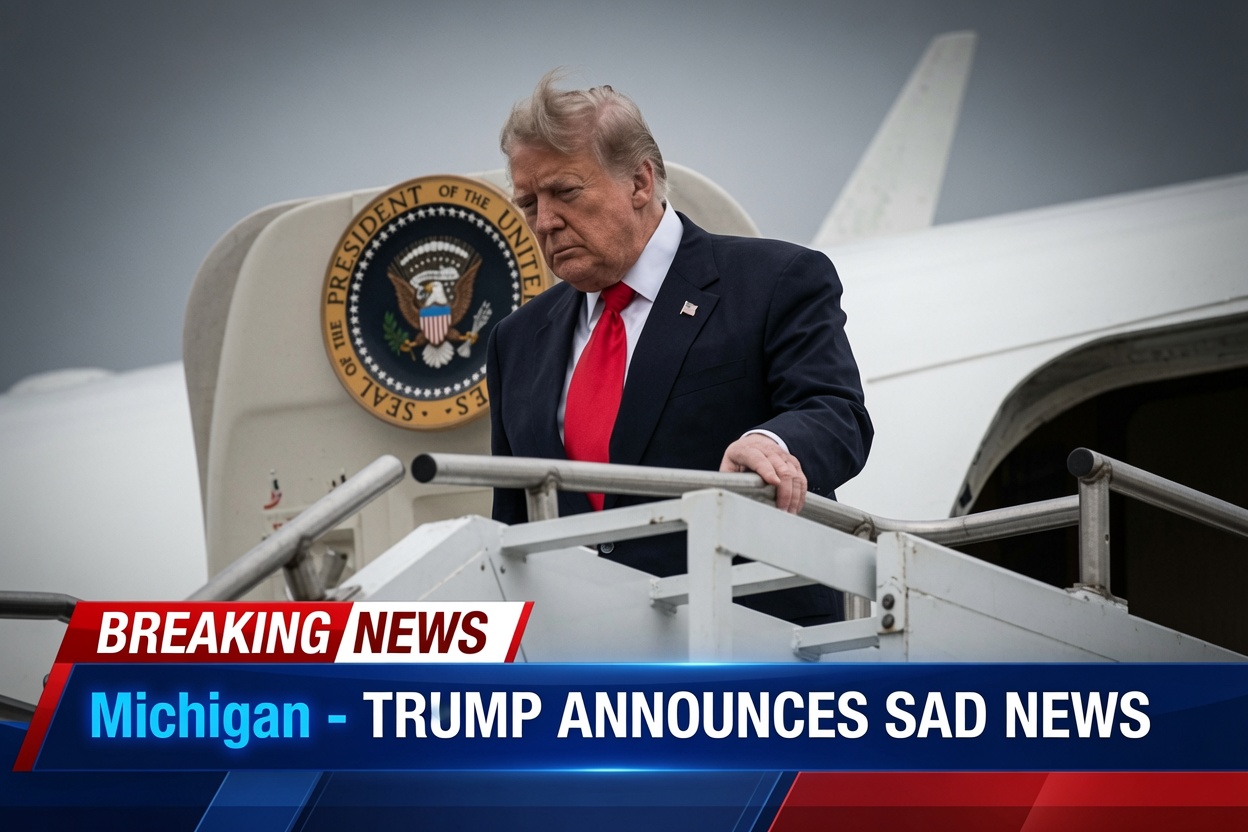
President Donald Trump visited General Motors’ Milford Proving Ground on Monday to highlight what his administration describes as a resurgence in American auto manufacturing and to defend his trade policies, just days before Michigan’s August 4 primary.
Trump toured the sprawling 4,000-acre facility, which features more than 150 miles of test roads and serves as a key site for vehicle development and validation. He was joined by GM Chair and CEO Mary Barra and President Mark Reuss. The visit included demonstrations of American-made vehicles, underscoring the administration’s focus on domestic production.
In remarks, Trump emphasized tariffs and “America First” trade measures as drivers of new investment and job growth in the auto sector. The White House pointed to major commitments, including General Motors’ $6 billion investment in U.S. manufacturing with expansions at plants such as Orion Township, Ford’s $3 billion BlueOval Battery Park project in Marshall expected to create 1,700 jobs, and additional investments by Stellantis. Officials also noted stronger recent vehicle sales and shifts of some production back to the United States.
The trip comes as Michigan prepares for its primary election, with early voting underway. Key races include the Republican gubernatorial primary featuring Trump-backed Rep. John James and the uncontested GOP Senate nomination of former Rep. Mike Rogers. Trump has previously carried the state and views it as central to broader midterm efforts.
Administration officials argue the policies are reversing decades of offshoring and strengthening supply chains. Critics, including some business leaders and Democrats, contend that tariffs have raised costs for manufacturers and consumers while complicating trade relationships, particularly with Canada, a major partner in the North American auto industry.
Michigan’s economy remains heavily tied to manufacturing. The president’s third visit to the state in his current term continues a pattern of focusing economic messaging on industrial heartland communities. The event at the historic proving ground, operational since 1924, provided a symbolic backdrop for claims of an automotive recovery driven by domestic incentives and protective trade measures.