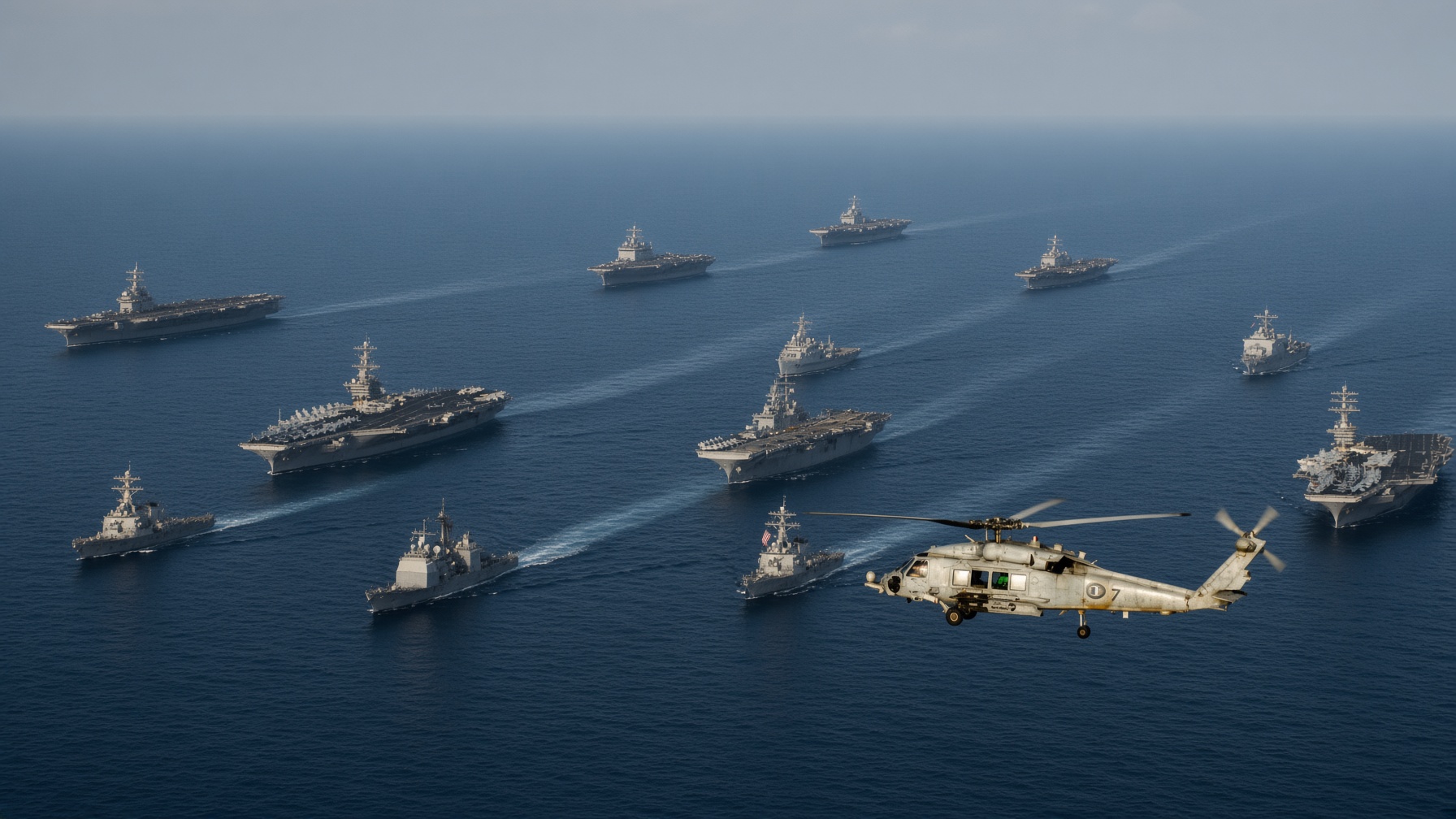
ARABIAN SEA — Tensions between U.S. and Iranian forces have intensified following a reported confrontation at sea involving an Iranian vessel that approached the USS Abraham Lincoln aircraft carrier at close range, according to two U.S. officials familiar with the incident.
The officials, who spoke on condition of anonymity because they were not authorized to discuss the operation publicly, said an American Navy vessel attempted to engage the Iranian ship with its 5-inch Mark 45 naval gun. The weapon reportedly missed the vessel several times before a U.S. military helicopter was dispatched to the area.
According to the officials, the helicopter subsequently fired Hellfire missiles at the Iranian vessel, striking it twice. The condition of the ship and the status of its crew remain unclear, and no casualty figures have been publicly confirmed.
The circumstances surrounding the initial gunfire are also uncertain. Officials have not established whether the rounds were intended as warnings, an attempt to disable the vessel or direct fire against the approaching ship.
Close Encounter Raises Tensions
The USS Abraham Lincoln serves as the centerpiece of a U.S. carrier strike group operating in the region. The formation includes guided-missile destroyers and other naval assets designed to protect the carrier and support a wide range of military operations.
An aircraft carrier represents one of the most powerful conventional military assets available to the United States. Its presence is supported by layers of defensive systems, aircraft and escort vessels, making any potentially hostile approach toward the carrier a highly sensitive military situation.
The reported confrontation comes amid a broader pattern of tensions involving American and Iranian forces operating across the region.
U.S. officials have previously accused Iranian military assets of conducting aggressive or unsafe maneuvers around American ships and aircraft. Such encounters can become particularly dangerous when commanders have only seconds to determine whether an approaching vessel poses an imminent threat.
Officials Remain Tight-Lipped
Despite the seriousness of the reported incident, American military authorities have provided limited public information.
U.S. Central Command, which oversees American military operations across much of the Middle East, has not publicly confirmed the details described by the officials. A defense official contacted for comment reportedly declined to provide additional information.
As a result, several important questions remain unanswered.
It is unclear which U.S. warship fired the Mark 45 gun, what type of helicopter conducted the subsequent missile attack or how severely the Iranian vessel was damaged.
The absence of an official account also means that the circumstances leading to the confrontation remain difficult to independently verify.
Weapons Used in the Encounter
The Mark 45 is a long-serving U.S. Navy naval gun system deployed aboard surface combatants. It is designed for multiple missions, including engaging surface targets and providing naval gunfire support.
Hellfire missiles, meanwhile, are precision-guided weapons that can be employed against a variety of targets. Maritime versions and employment configurations allow appropriately equipped aircraft to engage surface vessels.
The U.S. Navy operates MH-60R Seahawk helicopters capable of conducting anti-surface and other maritime missions, although officials have not confirmed which aircraft participated in this incident.
A Dangerous Regional Environment
The reported encounter is unfolding against a backdrop of heightened military tensions throughout the Middle East and surrounding waterways.
American and Iranian forces have previously been involved in confrontations involving ships, drones and aircraft. Each encounter carries the possibility of rapid escalation, particularly when military platforms operate within close proximity.
For U.S. commanders, the challenge is balancing force protection with the need to prevent individual incidents from developing into a broader conflict.
For Iran, encounters involving American carrier groups are similarly significant, particularly as Tehran continues to oppose U.S. military activity in the region.
What Comes Next
The fate of the Iranian vessel and its crew remains one of the most important unanswered questions. No independently verified information has established whether the ship sank, remained operational or was abandoned following the reported missile strikes.
Investigators are also expected to examine radar records, communications, weapons data and the movements of both vessels to reconstruct the sequence of events.
Until U.S. or Iranian authorities provide additional information, key aspects of the confrontation remain unconfirmed. What is clear is that the reported encounter highlights the growing risks facing military forces operating in close proximity in one of the world’s most strategically sensitive maritime regions.