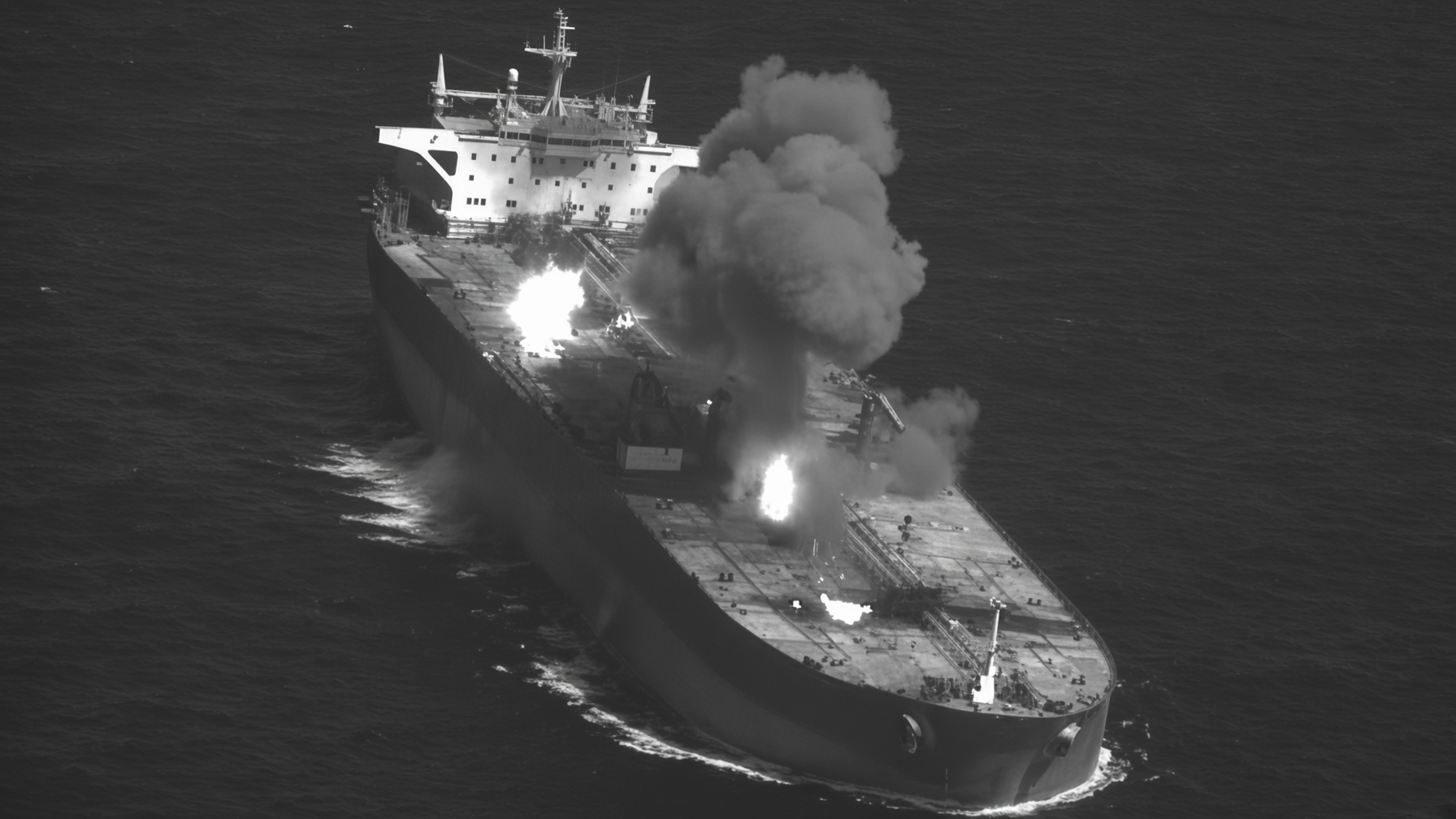
WASHINGTON — U.S. forces struck three Iranian oil tankers Saturday after Iran’s Islamic Revolutionary Guard Corps launched ballistic missiles toward two American Navy warships, marking a significant escalation in the increasingly direct confrontation between Washington and Tehran.
U.S. Central Command confirmed the strikes, saying the American vessels had come under multiple attacks while operating in the region. According to CENTCOM, the U.S. aircraft carrier and guided-missile destroyer targeted by Iran successfully evaded the incoming attacks, and no American personnel were injured.
The American response shifted the confrontation from attacks on military forces to strikes against Iranian oil infrastructure at sea, potentially increasing pressure on Tehran’s ability to move and export crude.
Three Iranian Tankers Targeted
CENTCOM said U.S. forces struck three Iranian crude-oil carriers as part of the response.
Two of the tankers were described by the U.S. military as being permanently disabled, while a third vessel, which was not carrying cargo, was destroyed. The military said the ships were connected to what it characterized as a shadow network that helps finance Iran’s Islamic Revolutionary Guard Corps and armed groups aligned with Tehran.
One of the vessels was struck near Kharg Island, a major Iranian oil-export hub. Other strikes occurred in strategic waters near Iran, according to U.S. officials and reports.
The attacks represent a potentially important development because they directly affect commercial and economic assets associated with Iran’s oil industry rather than focusing solely on military facilities.
U.S. Warns of Further Action
CENTCOM Commander Adm. Brad Cooper said the United States would continue defending American forces and warned that additional Iranian attacks could result in further action against Iran’s oil fleet.
The U.S. military has characterized its latest operations as part of an effort to counter Iranian attacks while putting pressure on networks that Washington says provide financial support to the IRGC and regional armed groups.
Iran has not accepted the U.S. characterization of the strikes as legitimate retaliation. Iranian state media later reported that Tehran claimed to have responded by targeting American vessels and oil tankers, although those claims were not independently verified at the time of reporting.
Rising Risks for Regional Shipping
The latest exchange adds to concerns surrounding maritime security and energy markets in the Persian Gulf and surrounding waters.
The Strait of Hormuz, located between Iran and Oman, is one of the world’s most important energy corridors. Any sustained disruption to shipping through the region could have consequences beyond the immediate conflict, potentially affecting global oil supplies and prices.
The confrontation also comes after months of intermittent fighting and diplomatic efforts between Washington and Tehran. Recent military exchanges have raised concerns that the conflict could broaden further, particularly if attacks on military or commercial vessels continue.
For now, U.S. officials say American forces remain prepared to respond to additional threats, while Iran continues to demonstrate its ability and willingness to challenge U.S. military and economic interests in the region.
The strikes on the three tankers represent another major escalation in a conflict increasingly involving both military targets and critical economic infrastructure, with the potential consequences extending well beyond the battlefield.