Trump’s calls for FCC punishment against journalists spark urgent constitutional debates over political power and press freedom.
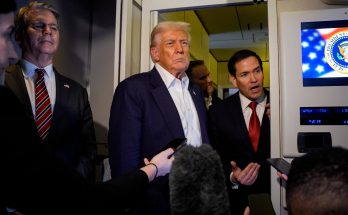
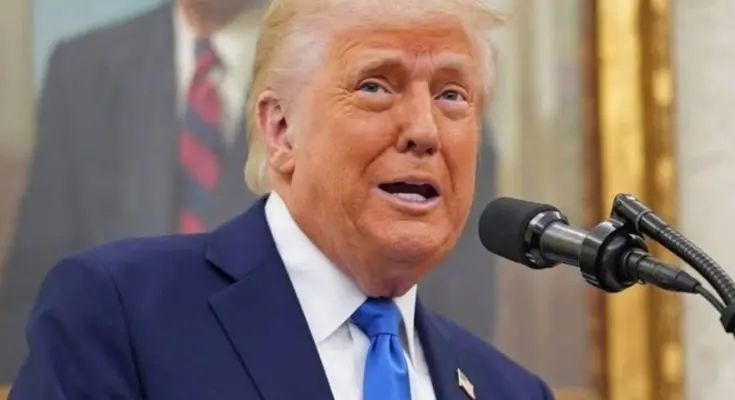
The room went silent when he said it. Reporters stared back, some visibly stunned, while others immediately began typing. President Donald Trump had once again turned his attention toward the news media, warning that journalists and broadcasters could face consequences over coverage he considered inaccurate or unfair.
It goes directly to the long-running constitutional debate over the relationship between political power and an independent press.
In August, Trump said NBC journalist Kristen Welker should be reported to the Federal Communications Commission for what he described as an inaccurate characterization of his record of endorsing political candidates. Trump called for a possible “rebuke or punishment” by the FCC. NBC responded by defending Welker and saying it stood behind her. Reuters reported that the FCC itself has limited authority over broadcast content and generally says it cannot replace a broadcaster’s journalistic judgment with its own because of First Amendment protections.
The controversy has not remained isolated.
ABC and Disney have also challenged the FCC in court, arguing that an unusually early review of licenses for eight Disney-owned ABC stations amounts to retaliation connected to the network’s programming and coverage. FCC Chairman Brendan Carr has rejected that characterization, saying the agency’s actions concern broadcasters’ obligations under the public-interest standard. The legal dispute remains ongoing.
Meanwhile, on September 16, the Senate Commerce Committee approved legislation designed to prevent federal officials from pressuring private companies to suppress constitutionally protected speech. The measure passed 18–10 and would allow individuals to sue federal employees who coerce companies into suppressing protected expression. It still requires approval from the full Senate and House before it could become law. Reuters reported that lawmakers from both parties cited concerns about government pressure on private platforms and media organizations.
That is why the response from journalists cannot simply be another angry headline or social-media argument.
The first response should be clarity.
News organizations need to explain what they are reporting, how they know it, what remains uncertain, and where mistakes may have occurred. Reporters should verify facts, distinguish reporting from opinion, correct errors quickly, and make their evidence visible to the public.
A free press does not mean journalists are immune from criticism. Presidents have the right to criticize reporters. Politicians have the right to challenge stories. News organizations can and should be held accountable for factual errors.
But government power raises a different question.
When regulatory authority, licensing decisions, access to officials, or other government mechanisms become connected to disputes over journalism, the constitutional stakes become much greater.
That is where transparency and due process matter.
Newsrooms also face a practical challenge: solidarity. Competing outlets do not have to agree politically or editorially to defend the principle that journalists should be able to report on government officials without government retaliation for protected speech.
Local newspapers, television stations, national networks, digital publications, press organizations, and independent journalists all operate in different environments. But they share an interest in maintaining public access to information about government.
The answer is not to demand that every journalist agree with every president—or that every story be accepted without scrutiny.
The answer is to preserve a system in which facts can be challenged publicly, corrections can be made openly, courts can review government actions, and citizens can hear competing accounts before reaching their own conclusions.
The First Amendment does not promise a comfortable relationship between political leaders and the press.
It protects a difficult one.
And when tensions rise between government officials and journalists, the public has a stake in seeing the facts, the evidence, the legal arguments, and the competing claims clearly—without either side being given unquestioned authority over what Americans are allowed to hear.