What appeared to be a fragile diplomatic pause in the Persian Gulf has rapidly unraveled, replacing cautious optimism with renewed military confrontation. A ceasefire that seemed capable of preventing broader conflict now faces its greatest test after fresh U.S. military action.
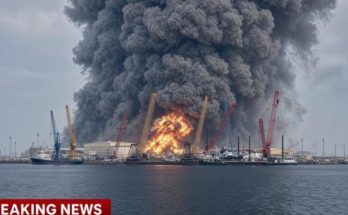
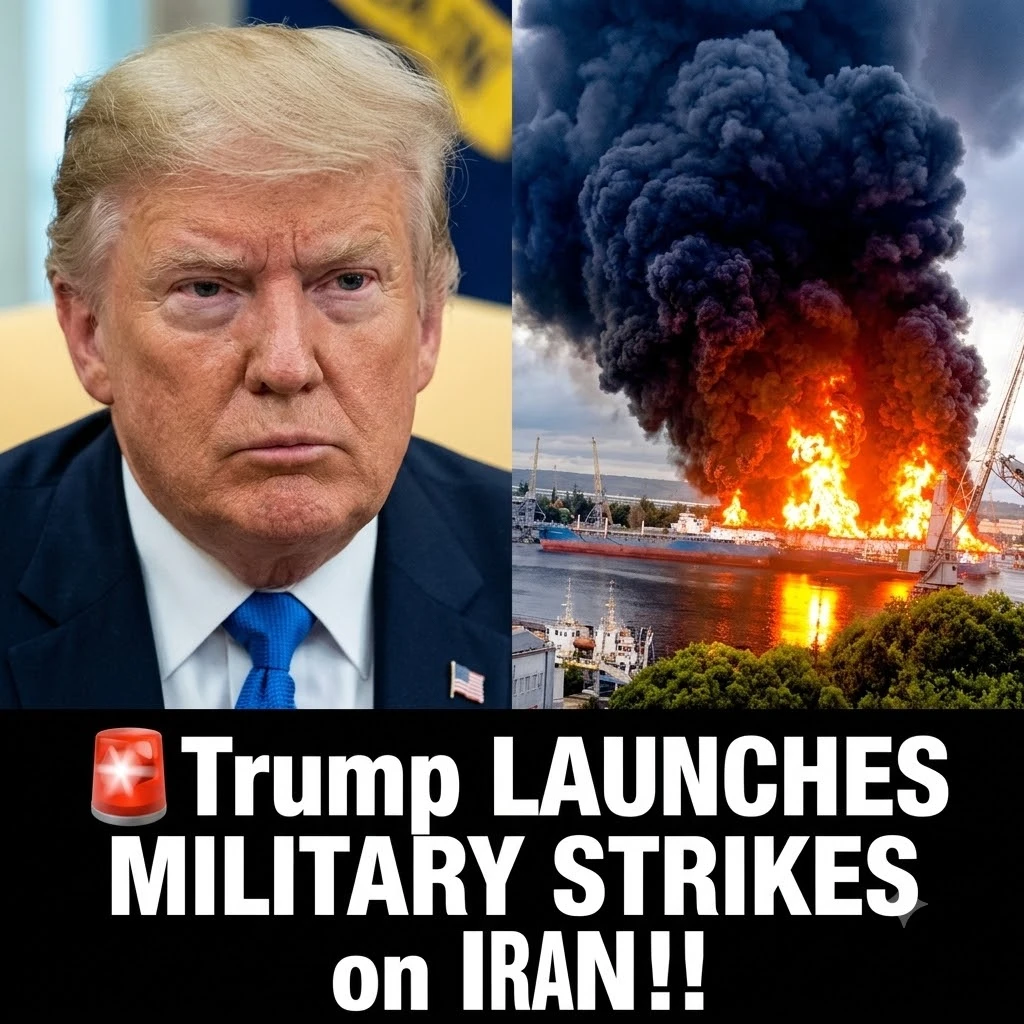
According to the developments discussed in the MeidasTouch analysis, U.S. Central Command confirmed large-scale airstrikes targeting military facilities in southern Iran following an alleged Iranian drone attack on a Singapore-flagged commercial vessel navigating near the Strait of Hormuz.
American officials reportedly described the operation as a defensive response aimed at protecting international shipping lanes. The strikes allegedly focused on missile storage sites, drone facilities, and coastal radar systems believed to support Iranian military operations in the strategic waterway.
The incident immediately reignited one of the world’s most sensitive geopolitical disputes.

Washington’s position, as presented in the report, maintains that the commercial vessel was traveling safely along the internationally recognized Omani maritime corridor, a route widely used by global shipping to reduce regional security risks.
Iran, however, reportedly presents an entirely different interpretation.
Officials in Tehran argue that a recently negotiated memorandum granted Iranian authorities temporary supervisory responsibilities over navigation in parts of the Strait of Hormuz. From their perspective, vessels entering alternative shipping corridors without prior coordination represented a violation of those understandings rather than an act of lawful transit.

That competing legal interpretation has transformed what might otherwise have remained a maritime security dispute into a broader diplomatic confrontation involving sovereignty, navigation rights, and regional influence.
President Donald Trump addressed the developing crisis before military operations became public.
Following reports of the drone attack, Trump acknowledged the incident publicly while emphasizing that consequences would follow. When later questioned by reporters inside the Oval Office, he declined to elaborate, responding only that observers would “find out soon.”
The timing of those remarks has drawn significant attention.

Throughout recent appearances, Trump has repeatedly argued that negotiations with Iran continue from what he describes as “a position of absolute strength,” insisting that Tehran remains eager to secure a comprehensive agreement with the United States despite mounting regional instability.
Iranian officials reject that characterization.
Leaders connected to both parliament and the Islamic Revolutionary Guard Corps reportedly argue that their actions represented enforcement of ceasefire arrangements rather than violations. They also warned that any military escalation would receive what they described as an appropriate response at a time and place of their choosing.
The growing disagreement illustrates how rapidly diplomatic language can collapse once competing interpretations of military agreements emerge.

Rather than debating broad strategic objectives, both governments now appear locked in fundamentally different readings of the same understandings governing navigation through one of the world’s most economically vital waterways.
The MeidasTouch commentary also advances broader political criticism, arguing that the administration mishandled the memorandum governing maritime operations and suggesting the timing of military action may have carried economic implications. Those claims remain part of the program’s analysis and have not been independently established.
Whether viewed through the lens of military necessity, diplomatic failure, or political calculation, one conclusion has become increasingly difficult to ignore.
The Strait of Hormuz once again stands at the center of global uncertainty, where every drone launch, naval maneuver, diplomatic statement, and military response carries consequences extending far beyond the Middle East—reaching financial markets, energy supplies, and international security itself.