U.S. and Iranian Officials Near Final Terms on Deal to End War as Hormuz Reopening Remains Central Demand
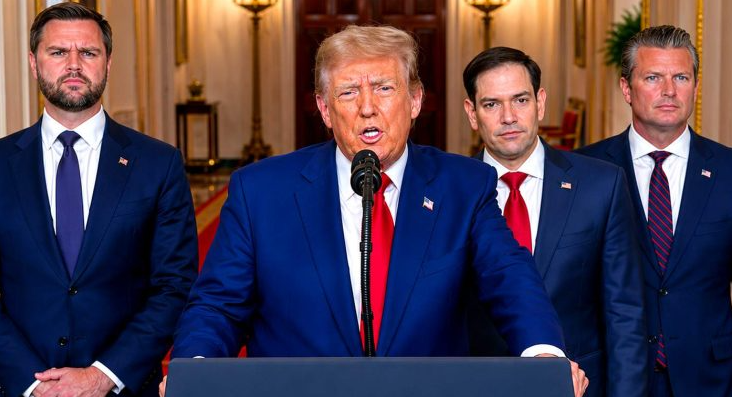
President Donald Trump, Vice President JD Vance, Secretary of State Marco Rubio, and senior members of the administration have spent recent days finalizing the outlines of a possible agreement to end the war with Iran. The talks center on reopening the Strait of Hormuz, lifting the U.S. naval blockade, and addressing Iran’s nuclear program, even as limited military clashes continue.
Speaking during a visit to India, Rubio repeated the administration’s position that the strait must be reopened. “The straits have to be open, they’re going to be open,” he told reporters. “What’s happening there is unlawful, it’s illegal, it’s unsustainable for the world, it’s unacceptable.” He noted that negotiations were under way in Qatar the same day and that progress would depend on settling precise language. “I think it’s a lot of talking back and forth going on about specific language in the initial document, so it’ll take a few days. The president expressed his desire to make it. He’s either going to make a good deal or no deal.”
The diplomatic effort has unfolded against a backdrop of ongoing military activity. Dozens of U.S. warplanes and nearly two dozen Navy ships, including two aircraft carriers and their escorts, have maintained a blockade of Iranian ports in the Gulf of Oman and Arabian Sea. A senior U.S. military official said some of those forces were threatened by Iranian surface-to-air missiles, and that American strikes on Monday targeted areas near the Iranian port and naval base at Bandar Abbas. Although a cease-fire has been in place for roughly six weeks, American and Iranian forces have continued to clash in smaller incidents. The latest strikes occurred while Iranian negotiators were already in Qatar.
Iran’s foreign ministry spokesman, Esmaeil Baqaei, acknowledged Monday that the two sides had reached understandings on a substantial share of the issues under discussion. “It is correct to say that we have reached a conclusion on a large portion of the issues under discussion,” he said at a weekly briefing. He quickly added, however, that a signed agreement was not close. “To say that this means the signing of an agreement is imminent—no one can make such a claim.” Baqaei accused Washington of shifting its positions during the talks.
Under the framework being discussed, Iran would reopen the Strait of Hormuz in return for the United States ending its blockade of the waterway. Additional sanctions relief would be possible if Tehran agreed to reduce its uranium enrichment. A source familiar with the discussions said the basic elements of a deal command broad agreement and that the Trump administration is satisfied with the direction of the talks, even as details remain unresolved. The same source indicated that Iranian officials appear more willing to compromise than they were before the recent U.S. military operation.
With both sides still refining language and the military situation remaining fluid, officials on both sides expect several more days of negotiation before any final decision. The administration has signaled it will accept only an agreement that meets its core conditions on Hormuz and nuclear activity.