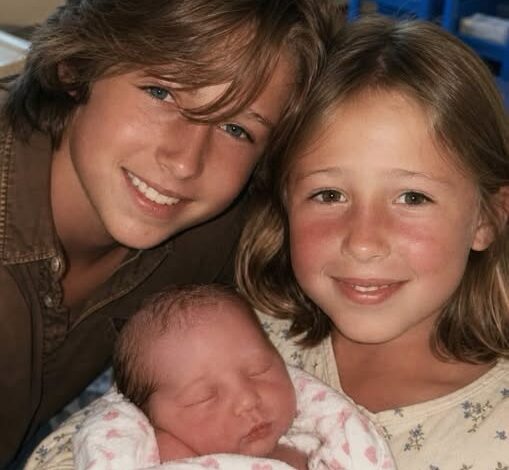
The appointment card says Mary will come back after the baby is born, but the space marked “address” is blank. At 9:10, Lisa turns the card toward her.
“Where do you expect to sleep after the baby arrives?”
“At my mom’s apartment,” Mary says. “Can the baby come home there with me?”
“That’s what we’ll work toward.” Lisa sets another card beside the first. “Who will help you get to school?”
Mary picks up the card. She is twelve, and she has already missed two mornings for appointments. “Ben wants to help. He has school too.”
“Does your mother work during the day?”
“She does. Could the baby go with me?”
“We’ll need to ask about childcare.” Lisa opens a blue folder and puts the appointment cards inside. “And about your school schedule.”
Mary presses the folder flat against her knees. “Who do we ask?”
“I can find a family support worker. That person can help you look at the choices.”
Mary looks at the closed door. Until now, she has talked about the baby with Helen and Ben, and with the people at the clinic. A support worker would need to know about school and Helen’s apartment too.
“Would she have to come to our place?”
“She might. You can ask her before you agree to anything.” Lisa takes a sheet from a drawer. “First, let’s make sure you know when to come back here.”
She points to the date on the card. “At that visit, we’ll check how you and the baby are doing. Your mother can come with you if you want.”
“What if I can’t make that time?”
“Call the clinic.” Lisa taps the number printed beneath the appointment date. “This one. Ask for the appointment desk.”
Mary copies it onto the sheet. “Not the number on the other card?”
“The one on that card is for questions about your care. The appointment desk can change the time.”
Mary reads both numbers back. When she mixes up two digits, Lisa lets her try again, then hands her the card to check.
“My mom writes numbers on the back of old envelopes,” Mary says. “Then she can never find the right envelope.”
About the author: Fohve Editorial Team
The Fohve editorial team edits and fact-checks every article we publish.
More from Fohve Editorial Team · Editorial Standards · Corrections Policy · Report an error
Lisa smiles. “We can give her a card of her own.”
She puts a second card in the folder. Mary imagines Helen slipping it into her purse alongside the grocery list, where it might actually stay.
“Will the support worker tell me what happens to the baby?” Mary asks.
“She can help you make a plan. You should be part of making it.” Lisa hands her the sheet. “If the plan has a word you don’t understand, stop me.”
Mary writes two questions, leaving space beneath each one. “Can we have the plan written down before the baby comes? I want to see it.”
“Yes,” Lisa says. “I’ll start looking for someone today.”
Mary tears the questions apart and slides the one about coming home into the folder’s front pocket.
Lisa handed Mary a pen cap from beneath the appointment cards.
“You might need that,” she said.
Mary put it back on the pen. “Can I bring the folder home?”
“It belongs to you. Bring it when you come back, too.”
At 4:20, Mary is setting cups on the kitchen table when Helen brings in an envelope. David from the newspaper has delivered it, and his name is printed across the top.
“He said he wanted us to check a few details,” Helen says. “Maybe that’s all this is.”
Mary sets down the second cup. “Did he say what details?”
Helen slips a finger under the flap. “Not when he brought it by. He was in a hurry.”
The envelope contains a letter and a folded sheet. Helen reads the letter first, holding it close to the kitchen light. Mary can see a dark patch through the folded paper underneath.
“He wants a comment before they print,” Helen says. “There’s a picture, too.”
“Of who?”
Helen opens the sheet across the table. Mary sees herself outside the clinic, her hand on the strap of her bag. Beside her is the school bus stop sign, clear enough to read.
Mary pulls the proof closer. The caption names the stop and says she is a pupil at a nearby school. It does not give her name, but she sees the corner store in the background, right where she waits each morning.
“Why does he need the stop in the picture?” she asks.
Helen reads the caption again. “Maybe he doesn’t. We can ask him.”
Mary takes the pen from beside the blue folder and draws a circle around the sign. The ink crosses the edge of her sleeve in the photograph.
“Could he take this part out?”
“He might be able to use another picture.”
“I don’t want another picture.”
Helen puts the letter down. “Listen. We can tell him that.”
Mary picks up one of the cups. Helen has given her the one with the faded red apple, the cup Mary always reaches for first. She sets it beside Helen instead, and Helen pushes it back.
“That’s yours,” Helen says.
Mary leaves it where it is. “When did he take it?”
“I don’t know.”
Mary looks at the picture again. She remembers coming out of the clinic with her folder tucked against her coat. She had been trying to find her appointment card, not looking across the street.
On page 3
“Did you talk to him before today?”
Jump to a page
“Did you talk to him before today?” she asks.
Helen picks up the letter. “He called to ask about the story.”
“What did you tell him?”
“I thought he wanted to make sure he had the details right.”
Mary rests her finger on the circled sign. “Please call him before he prints it. Ask him to take the picture out.”
Helen reaches for the telephone. “I’ll ask.”
The letter has David’s name at the bottom. Helen dials the number printed beneath it.
Helen waits, then says, “Listen, I have the photograph you sent. My daughter wants to know why the bus stop has to be in it.”
Mary watches Helen turn toward the window. She can hear a man’s voice through the receiver, but not the words.
“Can you come here and talk to us?” Helen asks. “Mary wants to ask you herself.”
Helen reaches for a pencil and writes a time on the back of the envelope. “All right. But please don’t print it before we talk.”
Mary holds out her hand. Helen gives her the envelope, and Mary reads the time. “Does that mean he’ll take it out?”
“He didn’t say he would,” Helen says. “He said he’ll come.”
At 8:30 the next morning, Mary sits beside Ben in the clinic waiting room. They compare appointment cards, and Ben points to the date on his.
“That’s the same day as mine,” Mary says.
“Good. One trip instead of two.” He takes out his bus card and checks the balance on the receipt tucked behind it. “I’ve got enough for today. Another trip across town will use most of what’s left.”
“How much is the fare now?”
“Two dollars each way.” He puts the receipt back. “I can ask at home.”
Mary starts to offer him money, then stops. She has her own fare in her coat pocket, but she needs it to get home.
Lisa comes through the waiting room door with a woman carrying a folder. “Mary, this is Ruth. She’s the family support worker I told you about. She can help with school and childcare.”
Ruth pulls up a chair. “Lisa said you wanted a plan before the baby comes. Have you talked with anyone at school yet?”
“Not about childcare,” Mary says. “Can I still go to my classes?”
“We can ask what arrangements are available. I can contact the school, but I need your permission first.” Ruth opens her folder to a form. “You can tell me who you want me to call.”
Mary gives her the name of the school and her counselor. Ruth writes them down, then turns the form so Mary can read it. There is space for a signature at the bottom.
Ben peers at the appointment cards again. “We have school, clinic, and now another meeting. I need a bigger pocket.”
Mary slips his card into the blue folder beside hers. “You can borrow mine until we leave.”
Ruth takes out a second sheet. “What would you like the school to know?”
Mary looks at the blank page. “That I want to come back. And that Ben wants to stay in school, too.” She looks at him. He nods.
“Can you make David leave the photograph out of his paper?” Mary asks.
On page 4
“I can’t make that decision for him,” Ruth says.
“I can’t make that decision for him,” Ruth says. “But we can write down what you want to ask.”
Mary takes the pen. With Ruth beside her, she writes, “Please do not print the photograph or identify my school bus stop.” She adds her name and folds the sheet.
Ruth turns the permission form back toward her. Mary signs it and hands her the folded request for David.
“Will you give it to him?” Mary asks.
“I can send it,” Ruth says. “But if you want to speak to him yourself, you can.”
Mary looks at Ben. He puts his appointment card in his pocket and says, “I can come if you need me.”
“Let me ask Mom first,” Mary says.
At 6:15 that evening, David stands inside Helen’s living room with his laptop under his arm. Mary holds out the request before he has found a place to sit.
He reads it, then lays it beside him on the couch. Helen stays standing near the doorway.
“I want to hear what you have to say,” David tells Mary. “But readers deserve to know what support young families need.”
“Can you tell them without my picture?” Mary asks.
David opens his laptop. “A picture helps people understand the story.”
Mary points to the folded request. “The sign is right beside me. Somebody could see it and wait there.”
Helen sits at the far end of the couch. “There’s barely room when we open this at night,” she says. “Mary sleeps here, and I have to turn sideways to get past.”
David glances at the narrow space between the couch and the chair. “You’re making room for a baby, too?”
“We’re trying to,” Helen says. “That doesn’t mean we want the bus stop in the paper.”
Mary picks up the request and reads a sentence she has written with Ruth. “Please leave the photograph out. Please don’t name the stop.”
David nods. “I think it’s fair to show the difficulties families face. A photograph can do that better than a list.”
“Do you need the stop for your list?” Mary asks.
He rests his hand on the laptop. “How did you get to school before the appointments began?”
“The bus,” Mary says. “That one.”
Helen presses her hands together. “Listen. He asked me about the route on the phone. I told him he had the right stop.”
Mary turns toward her. “Why did he ask you?”
“He wanted to check his caption. I thought if I answered, he might leave the rest alone.”
David picks up his bag. “Helen was trying to help me get the facts right.”
Mary keeps looking at Helen. “You could have asked me first.”
“I should have,” Helen says.
David moves the request onto the laptop. “I’ll take another look at it. I can’t promise to remove the photograph tonight.”
On his screen, a sent message lists three news desks as recipients of the original photograph. Mary is still facing Helen as David reaches for the lid.
He closes the laptop over the message.
“Could you call us before you decide?” Mary asked.
David picked up his bag. “I can do that.”
On page 5
Helen walked him to the door.
Helen walked him to the door. Mary stayed beside the couch, watching Helen hold it open until he stepped into the hall. Then Helen came back and picked up Mary’s request from the cushion.
At ten the next morning, Ruth spread a paper calendar across her desk between Mary and Ben. There were boxes for appointments and school, and a narrow column marked “Father.”
“Can you put the clinic visits and school on the same one?” Mary asked.
“Yes. Let’s start with your next appointment.” Ruth passed her a pencil. “You can change it if the time moves.”
Mary copied the date from her card. Ben leaned over to read it and turned the calendar a little toward himself.
“I can come to that one,” he said. “One appointment, then school.”
Ruth pointed to another box. “I’ve asked the school for a contact. We’ll need to talk about classwork and childcare after the baby comes.”
“Will they let me go back?” Mary asked.
“We have to make the arrangements first. I can help with that.” Ruth slid a second pencil to Ben. “Could someone in your family meet the baby after the morning bus ride?”
“I have to ask. My mom’s schedule changes.” He wrote “ask Mom” beside the box, then looked up. “Does your mom get a copy too?”
“Yes,” Ruth said. “Both families need to share their schedules. Otherwise we could put someone down for a time they can’t cover.”
Mary wrote “Helen” beside the school contact. The pencil left a dark mark when it caught on the edge of the desk.
“Will people have to come to our apartment?” she asked.
“Regular home visits,” Ruth said. “We’ll agree on the times with you and Helen. The visits are meant to help you keep the plan working, not make it without you.”
“Where will everybody sit?” Mary asked. “The couch takes up the whole room when it’s open.”
Ben said, “I can stand. I do it at school when I forget my chair is behind me.”
Mary gave him a small smile. Then she asked Ruth, “Can we say who comes?”
“I’ll tell you who to expect, and we’ll talk before anyone visits. We need the visits as part of the plan. Are you willing to try them?”
Mary looked at the appointment boxes, then at the space Ruth had left for the bus route. “Yes. Put the usual school stop down for now.”
Ruth wrote it in lightly. “I also spoke with David. He’s agreed to discuss a story without the photograph, but he hasn’t promised to leave it out.”
“Will he talk to us?” Mary asked.
“He said he would. We can call his office about a time.”
Ben turned the calendar toward himself again. “I need my school timetable before I can say which mornings.” He left his pencil beside the blank father column.
Ruth checks the clock and reaches for the calendar. “I can make a copy before you go. Would you like one for Helen?”
“Yes,” Mary says. “Can I bring it back if we have to change it?”
“Please do. A plan can change.” Ruth lifts the calendar from the table. “And call me after you see David.”
At 3:40, David slides a revised proof across the newspaper office counter. Mary sits beside Helen and looks first for the dark shape of the bus stop sign.
On page 6
There is no photograph.
There is no photograph. The caption is gone too. Mary reads the story once, then goes back through it, looking for the name of the stop.
David sets a sealed bottle of water in front of her. “Are you comfortable sitting there? We can find you another chair.”
“This one’s fine.” Mary picks up the bottle. “Could you open it?”
He twists the cap loose and hands it back. Helen takes the proof while Mary drinks. On a separate sheet, David has typed a short assurance.
Helen reads it and passes it to Mary. “Listen, does this mean the picture won’t be in the paper?”
“It means I’ll remove it from our planned story,” David says. “The bus stop won’t be described, either.”
Mary puts the bottle down. “Will you write that on the proof?”
“The assurance is right there.”
“I want it on the page with the story.” She points to the open space beneath the last paragraph. “Then I can keep them together.”
David takes a pen from the counter, but Helen touches the proof before he begins. “Can we read the whole story first?”
They read in silence. A telephone rings behind the closed office door and rings again. Mary reaches the end of the story and turns the assurance over, though there is nothing on the back.
David waits with his pen. “Is there a passage you want to ask about?”
“No. You can print this version.” Mary taps the assurance with one finger. “Why does it say ‘our paper’?”
“I can speak for our paper,” he says. “That’s the fair way to put it.”
Mary looks at Helen, who gives a small nod. Newspapers have their own names and their own offices. Perhaps David is only being careful about which one he can promise for.
“I missed the school art show for this,” Mary says. “Ben was going to show me what his class made.”
“I’m sorry,” David says. “Would you like me to write it now?”
He prints beneath the story: “Our paper will not use the photograph or identify the bus stop in this story.” He signs his name and adds the date.
Mary reads the sentence twice. “If there’s still a problem before I come home from the hospital, will you meet with us and Ruth?”
“Contact me,” David says. “We can talk about what’s needed.”
Helen holds out her hand for the proof, but Mary keeps it. She folds it around the words “our paper.”
At 11:15, Mary holds her newborn against her chest while Helen sets the blue folder on the hospital bedside table. A sheet of printer paper lies underneath it.
“Did you bring the email?” Mary asks.
Helen pulls out the sheet. “Listen. I asked David where he sent the photograph. He wrote back this morning.”
“Because it was in the other paper?”
Helen nods. “I saw it yesterday. The bus stop is in the picture, just like on the proof.”
Mary shifts the baby higher in her arms. The blanket slips, and a tiny foot pushes out. Helen tucks it back inside, but the foot comes right out again.
“That didn’t take long,” Mary says. She looks at the sheet. “Will you read it to me?”
On page 7
Helen puts on her glasses.
Helen puts on her glasses. “He says he sent the original photograph to three news desks.” She reads their names, then stops at the date above the message.
“Was it before he came to our apartment?”
Helen checks the date again. “Yes. He sent it before he sat on our couch.”
Mary looks at the baby. A nurse has said the baby can stay with her in the room, and she has kept one hand on the blanket ever since. Now she presses her palm flat against it.
“Did he tell them about the stop, too?”
“The email doesn’t say. But the other paper printed the stop in its caption.”
Mary reaches for the folder, then draws her hand back. “The school route is on the care calendar. Will Ruth need to change it?”
“We can ask her,” Helen says. “She’ll want to know about the picture.”
Mary watches Helen put the email beside the folder. There is a blue paper clip on the bedside table, left there when Helen brought in the proof. Mary points to it.
“Keep that for me. I want Ruth to see both papers.”
Helen takes the folded proof from the folder and lays it beside the email. “Do you want me to call David?”
“Not yet. Does he know you brought this here?”
“I only asked him to send it to me. I haven’t spoken to him since.”
Mary studies the photograph. The sign is small on the page, but she can read the name of the road. “Could he print a correction without putting my name in it?”
“We can ask him to,” Helen says. “Would you like Ruth there when we do?”
Mary nods. “And ask him about the other desks. He can tell them not to use it again, can’t he?”
“I’ll write that down.” Helen finds a pen in her purse and adds the question to the back of the email.
The baby opens one hand against Mary’s gown. Mary offers a finger, and the small fingers close around it.
Helen picks up the clip and fastens the email to the photograph proof.
“Will you keep those for Ruth?” Mary asked.
Helen slipped the papers into the blue folder. “Listen. I’ll bring them when she asks.”
At 2:30, Ben met Mary in the hospital family room. He held out his phone before he sat down. “Your mom sent this a minute ago.”
Mary read the message. Helen was near the bus stop, and there were people there with cameras.
“Are they still there?” Mary asked.
Ben typed the question. His phone lit up almost at once. He turned it toward her. “She says yes. Two of them.”
Mary looked at the care calendar on the table. The school bus route was written beside the mornings she expected to take it.
“Could we walk past them together?” Ben asked. “I could carry the bag.”
“Would they go away if we did?”
Ben put the phone down. “I don’t know.”
Ruth came in with a pencil and sat across from them. Mary showed her the message, then pushed the calendar into the middle of the table.
“Can we use another stop?” Mary asked.
On page 8
“Let’s look,” Ruth said.
“Let’s look,” Ruth said. She traced the route with her pencil. “The next one is farther away. I’ll check whether it gets you close enough to the childcare handoff.”
Ben took his bus card from his pocket and set it beside the calendar. “One ride to the handoff, one to school. Then back again. That’s more than I planned for.”
“A city bus ride is two dollars,” Ruth said. “Let me see what help is available for fares.”
Mary pointed to the line for home visits. “Can my mother still get the living room ready before we leave?”
“She’s working on it,” Ruth said. “I’ll visit her and check the sleeping space with her. We need a separate place for the baby.”
Ben picked up the pencil. “I could ask my mom about a ride, too.”
“You can ask,” Mary said. “But she has to get to work.”
He nodded and turned the pencil between his fingers. “She’d tell us if she couldn’t.”
Mary glanced at the little blanket folded over her arm. Earlier, Ben had tried to tuck its corner around the baby and ended up with it wrapped around his own wrist. She showed him how to fold it free.
“There,” she said.
“I was trying to be helpful.”
“I know.” She left the blanket with him and pulled the calendar closer.
Ruth rested her hand beside the route. “I’ll ask the school about a different handoff. We don’t have an answer yet.”
Mary took the pencil from Ben. “Cross it out. We need a way that gets us there without that stop.”
She drew a line through the bus route.
Ben puts his card beside the calendar. “If I take the other bus, I need another two dollars each way.”
“Can you get home today?” Mary asks.
“Yes. Tomorrow is the problem.”
Ruth turns the calendar toward herself. “Let me check the transport allowance. I’ll come back before visiting hours end.”
At five, Ruth returns to Mary’s hospital room with the calendar and a program form. Ben is sitting beside the baby’s bassinet, holding one tiny sock between his fingers.
“I thought it was a mitten,” he says. “There’s only one.”
“The other one is under her blanket,” Mary says. Ben finds it and sets the pair beside the baby.
Ruth places the form on the bed. “There is an allowance for trips connected with the care plan. It’s temporary. I need to check the amount.”
Ben takes his card from his pocket. “One ride home today. Two rides tomorrow. Then school.” He stops counting and looks at the calendar. “I can’t put all of those on here.”
Mary reaches for the blue folder. “Can you write the amount down where we’ll see it?”
Ruth reads the form again, then writes $40 on the calendar. “The program can give you forty dollars for transport. We’ll need to plan for when it runs out.”
“Can it cover Ben’s rides, too?” Mary asks.
“Yes, if they’re part of the care plan. We’ll put the trips on the calendar.”
Ben points to the school days. “I still have to check my timetable. I can take one of the regular jobs, though.”
“Which one?” Mary asks.
“I want to see when the handoff is first.”
On page 9
Mary takes the email from the folder and lays it on the bed.
Mary takes the email from the folder and lays it on the bed. She puts the signed proof beneath it, then finds the questions she wrote about school and bringing the baby home.
“First he sees what went out,” she says. “Then he sees what he signed.”
Ruth looks at the pages. “What do you want to ask David?”
“I want him to correct the description that identifies me. I don’t want my name in the correction, either.”
“Would you like me to call him?”
Mary nods. “Ask him to come to the meeting. Before we leave the hospital.”
Ruth makes the call beside the window. Mary hears her give the date and the office address, then say, “We need to discuss a correction.” She waits with the phone against her ear.
“He says he’ll come on June fourth,” Ruth tells them after she hangs up. “Ten in the morning.”
A nurse appears at the door to say visiting time is nearly over. Ben slips the socks into the bassinet, and Mary puts her questions on top of the other pages.
She closes the blue folder.
“Will you bring it tomorrow?” Mary asks Ruth.
“I will,” Ruth says. “You get some rest.”
At ten the next morning, Mary opens the blue folder at the family support office. Ben sits beside her, with Helen on her other side. Across the table, David waits while Ruth takes out a notepad.
Mary puts the email in front of him. The three news desks are listed beneath his message. She keeps the signed proof in her hand until he finishes reading.
“You sent them the picture before you came to our apartment,” she says.
David looks at the date. “Yes.”
Mary slides the proof across. “And this says you would leave it out of your paper.”
“That’s what I promised,” David says. “I could speak for our paper.”
Helen reaches for the email, then leaves it where it is. “Listen. The other paper described the stop, too. People were waiting there.”
Mary presses her foot against the chair leg. She has practiced the next part, but saying it with David at the table takes longer than she expects.
“The picture showed where I catch the school bus,” she says. “The description told people I was a pupil nearby. They could find that stop, and I couldn’t use it.”
Ben moves his chair closer to hers. “We crossed that route off the calendar,” he says.
David picks up the proof. “I thought leaving the picture out of our story was a fair answer to your request.”
Lisa has told Mary to stop when an explanation is not clear. Mary waits until David sets the proof down.
“Please tell me what you can do, not what you wish had happened.”
“I can publish a correction without naming you,” David says. “It can remove the description that points to the stop.”
“Will you ask the other desks to stop using the picture?” Mary asks.
David takes a pen from his pocket. “Yes. I can ask each one. I can’t make them agree.”
Ruth writes on a separate page that the alternate route and school contacts are part of the care plan. She adds the forty dollar transport allowance, then turns to Ben.
On page 10
“Can you check the handoff with the school?”
“Can you check the handoff with the school?” she asks.
“I can do that,” he says. “And check the bus times.” He glances at Mary. “That’s two.”
Mary gives him a small smile. Helen touches the back of her chair. “We still have to make room at home,” she says.
Ruth places another sheet before David. Together they settle on wording for the correction and his request to the three desks. Mary asks him to read it aloud, then points to the place beneath it.
“Will you sign it before you leave?”
David signs the correction wording beside Ruth’s notes.
Ruth puts a copy of the agreement in the blue folder and leaves the original for David. Mary watches him gather his papers.
“Will you tell me when you hear from the other desks?” she asks.
“I will,” David says. “I can’t say when they’ll answer.”
At 4:45, Mary stands in Helen’s living room while Ruth takes one end of the folded couch. Helen pulls the other end toward her, and the mattress begins to open.
“Where do you want me?” Mary asks.
“By the doorway,” Helen says. “You can tell us if there’s room to get through.”
The couch settles into place. Mary steps around its foot, turning sideways to pass the chair.
“I can make it,” she says. “Where’s the bassinet going?”
Helen points to a folded bassinet against the wall. A small white receipt rests on top of it. Mary picks up the receipt and reads the figure.
“Thirty-five dollars? Where did you get it?”
“Used, from a woman across town.” Helen takes the receipt and lays it on the shelf. “It was clean, and I checked that it was steady.”
Mary looks toward the corner where Helen keeps her sewing machine. The narrow stand is empty.
“Did you put the machine away?”
Helen holds the bassinet by its frame. “Listen. I sold it. I needed the money for the bassinet.”
Mary puts her hand on the empty stand. Helen has used the machine to mend school clothes and shorten curtains. “Can you get it back?”
“No. I sold it to the woman who bought our old chair.” Helen bends to open the bassinet legs. “I asked Ruth to help me check it.”
Ruth tests the frame and looks over the mattress. She asks Helen to leave the sleeping space clear and to call if she has questions. Then she takes the care plan from the folder.
“Can Mom read it out loud?” Mary asks. “From the beginning.”
Helen reads that Mary and the baby are to come home together after discharge. She reads the visit schedule, the school contact Ruth has arranged for Ben, and the forty dollar transport allowance.
“What if that runs out?” Mary asks.
“Call me before it does,” Ruth says. “We’ll look at what help is available then.”
Helen reaches the bottom of the page and stops. “There’s still room for Ben to put down his part.”
Mary takes the calendar and slips it back into the folder. “He’ll need to look at his school schedule.”
Ruth closes her notebook. “I can also tell David that Helen gave him the route detail, if you want that included.”
Helen holds the bassinet frame still. Mary looks at her mother’s empty sewing stand, then at the care plan.
“Leave her out of it,” Mary says. “Fix the description.”
Helen lifts one end of the bassinet, and Ruth moves the chair out of her way. “It might be a tight fit,” Helen says.
“Not as tight as you and the couch,” Mary says, and Ruth steps aside to let Helen pass.
Helen sets the bassinet beside the open couch.
“Will the sheet stay on?” Mary asks.
Helen presses her palm against the mattress. “It fits. I washed it this morning.”
Ruth checks the edge, then looks at Mary. “Do you want to try it?”
Mary tucks one corner under and gives it a small pull. It holds. She leaves her hand there until Helen asks if she wants a ride back to the hospital.
Several days after discharge, Mary is awake at 7:05, fastening the baby’s blanket in the kitchen. Ben puts his bus card and the care calendar on the table.
“Is the spare blanket in the bag?” he asks.
“I packed it last night. I think.” Mary pulls the bag closer. The baby gives a small grunt, and she stops to check the blanket around her.
Ben opens the calendar. “First the bus, then the handoff, then school.” He points to the route Ruth wrote down. “Does that stop have a bench?”
“I didn’t see one. We can stand.”
Helen comes into the kitchen with her shoes on. “Listen, if the bus is late today, call me. I can meet you at the handoff.”
Mary looks up. “Aren’t you working this morning?”
“Not until nine. I can walk over before that.” Helen takes the diaper bag while Mary settles the baby against her shoulder. “Did you find the spare blanket?”
“Not yet.” Mary reaches past a package of diapers and pulls out the folded blanket. “Here it is.”
Ben peers into the bag. “That’s smaller than the one on the couch.”
“It has to fit in the bag,” Mary says. She puts it back and closes the zipper. The baby opens one hand against her shirt.
Ben lays his finger on the calendar again. “The bus gets there at seven forty-eight. The handoff is at eight. Is twelve minutes enough?”
“Ruth walked it with us,” Mary says. “She said it took four.”
“Four, then.” He looks at the blank father column. “I’ll take the morning ride.”
Mary moves the blue folder out from under the calendar and opens it to the appointment card. The first visit is written there for Tuesday afternoon. She checks the calendar, where Tuesday has the same time.
“Can you get to that one?” she asks Ben.
“After school. I’ll meet you there.” He looks down at the card, then at the calendar. “Should I write that too?”
“Write the mornings first.”
Mary hands him the diaper bag. He hangs it on the back of his chair and picks up the pencil. Helen takes the baby for a minute, and Mary sits down beside him.
“Every school day?” he asks.
Mary nods. He sets the pencil against the father column.
Ben writes his name in the first empty square.