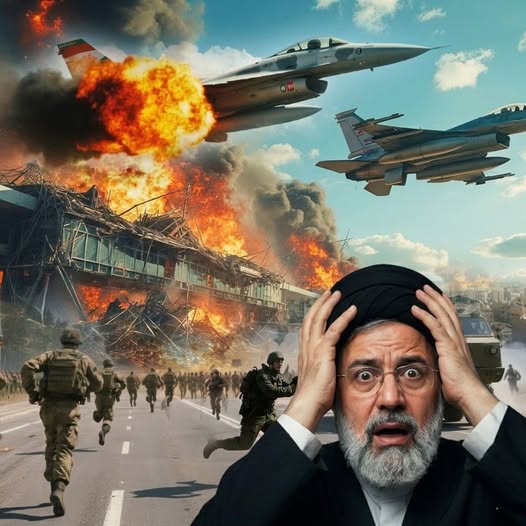
A stunning wave of reports spread across global media overnight claiming that Iran had agreed to surrender as U.S. fighter aircraft closed in on advancing armored formations. The dramatic headlines immediately triggered speculation that one of the most significant military confrontations of the century had reached its final chapter.
Yet as military analysts began examining the claims, a different picture started to emerge.
The story that captivated millions around the world may be far more complicated than the sensational headlines suggest.
The Reports That Sparked Global Shock
According to rapidly circulating accounts, armored columns were reportedly moving across key regions when advanced fighter aircraft were observed operating overhead. Within hours, rumors began spreading that Iranian leadership had decided to surrender rather than risk further military losses.
Social media exploded with claims that a historic announcement was imminent.
Financial markets reacted.
Military observers rushed to verify the reports.
But there was one major problem.
No official surrender announcement appeared.
No verified agreement was released.
And no internationally recognized authority confirmed that Iran had formally capitulated.
A History of Defiance
The surrender narrative surprised many observers because it appeared inconsistent with previous statements from Iranian leadership.
During earlier stages of the conflict, senior Iranian officials publicly rejected demands for unconditional surrender and repeatedly vowed to continue resistance despite military pressure. Public statements from Iran’s leadership emphasized that foreign military intervention would not force capitulation and warned of serious consequences for any escalation.
For this reason, intelligence analysts immediately questioned whether the reports reflected reality or merely represented another chapter in the ongoing information war.
The Battlefield Reality
Military experts note that modern conflicts are rarely decided by a single dramatic moment.
Even when one side suffers severe losses, command structures, reserve forces, and regional allies can continue operating for extended periods.
Recent military operations demonstrated that both sides remained capable of conducting complex missions despite heavy losses and intense combat. Rescue operations, air campaigns, and long-range strikes showed that the conflict remained highly contested rather than decisively concluded.
As a result, many analysts considered immediate surrender reports highly questionable.
The Armored Columns Mystery
Perhaps the most intriguing aspect of the story involved the armored formations themselves.
Some reports claimed fighter aircraft were preparing major strikes against advancing military units.
Others suggested the columns were retreating rather than advancing.
Still others argued that the vehicles had been misidentified altogether.
Without independent verification, it became impossible to determine which version of events was accurate.
Satellite imagery and intelligence assessments remained incomplete, leaving key questions unanswered.
The Twist No One Expected
As speculation intensified, observers began noticing something unexpected.
Rather than announcing surrender, officials appeared focused on reorganizing military assets, reinforcing defensive positions, and restoring damaged infrastructure.
This development surprised commentators who had expected a rapid political collapse.
Several defense experts argued that the reports of surrender may have originated from misinterpreted battlefield developments, exaggerated claims, or deliberate psychological operations designed to influence public perception.
In modern warfare, narratives can spread across the world long before the facts are fully understood.
Information Warfare Becomes the New Battlefield
The conflict has repeatedly demonstrated how quickly rumors can become accepted as reality.
Claims of destroyed fleets, downed aircraft, captured commanders, and imminent government collapse have frequently circulated before later being challenged or revised.
Military analysts increasingly warn that information warfare has become nearly as important as conventional combat.
Winning the narrative can shape public opinion, affect financial markets, and influence political decisions long before military outcomes are determined.
What Happens Next?
The central question remains unanswered.
Has Iran actually surrendered?
At present, there is no verified evidence supporting a formal surrender agreement.
Could military setbacks eventually force negotiations?
Possibly.
Could the conflict continue despite reports of collapse?
History suggests that outcome is equally possible.
What is clear is that the situation remains fluid, and dramatic headlines should be treated cautiously until supported by verifiable evidence.
Conclusion
The claim that Iran surrendered as U.S. fighter jets closed in on armored columns has generated enormous attention worldwide. Yet beneath the sensational headlines lies a much more uncertain reality.
No confirmed surrender has been announced, and available evidence suggests the situation remains far more complex than early reports indicated.
The moment that stunned the world may not be a surrender at all. Instead, it may be another reminder that in modern conflicts, the battle for information often moves faster than the battle on the ground—and the truth is usually the last thing to arrive.